
Teams measure time constantly.
Deadlines, delivery dates, and cycle times all shape how work is planned and evaluated.
But two commonly confused metrics quietly influence performance more than most teams realize: lead time and lag time.
Understanding the difference changes how teams predict outcomes and improve flow.
What Is Lead Time?
Lead time measures how long it takes for a request to be delivered from start to finish.
It begins when work is requested and ends when the work is completed.
From a customer perspective, lead time answers one simple question:
“How long will I wait?”
What Is Lag Time?
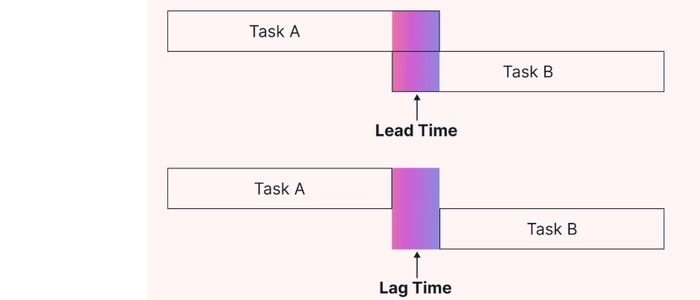
Lag time measures the delay between steps in a process.
It focuses on waiting — not working.
Lag time shows how long work sits idle before the next activity begins.
Lead Time vs Lag Time: The Key Difference
Although they sound similar, these metrics reveal different problems:
- Lead time shows overall delivery speed
- Lag time exposes inefficiencies between steps
A team can meet lead-time expectations while still suffering from excessive lag hidden inside the process.
Why Lag Time Often Goes Unnoticed
Lag time is invisible in most teams.
Work appears to be “in progress,” but nothing is actually moving.
Queues grow, handoffs slow down, and no one owns the waiting.
Waiting work is easiest to spot when every item sits in a column on a shared wall board, where anyone can see which items have stopped moving.
This is why teams struggle to improve even when they track delivery dates.
How Lead Time and Lag Time Affect Flow
Flow depends on reducing delays.
When lag time increases, flow collapses — even if people are working hard.
Reducing lag often delivers faster results than adding people or working longer hours.
This relationship becomes clear when teams quantify waiting versus working time: Flow Efficiency Formula (Explained So Anyone Can Use It) .
Why Measuring Only Lead Time Isn’t Enough
Lead time tells you what happened.
Lag time helps explain why it happened.
Without lag time, teams know delivery is slow — but not where to improve.
Using Lead and Lag Time Together
High-performing teams use both metrics:
- Lead time to set expectations
- Lag time to remove bottlenecks
This combination improves predictability without increasing pressure on people.
Reducing Lead Time in Knowledge Work
Most lead-time reduction comes from removing waiting — not speeding people up.
This practical guide explains how teams shorten delivery without overload: How to Reduce Lead Time in Knowledge Work .
Understanding Lead Time vs Cycle Time
Lead time and cycle time are often confused.
Cycle time focuses on how long work is actively processed, while lead time includes all waiting.
This explainer clarifies the difference: What Is Cycle Time? (Beginner Lean Guide) .
See Lead and Lag Time on a Kanban Board
A simple Kanban board makes both metrics visible without any software.
- Set up columns. Start with To Do, In Progress, and Done. Add a column such as Waiting or Review if work often pauses between steps.
- Date each card. Write the date on the card when the request arrives, and again when it moves to Done. The gap between those two dates is the lead time for that item.
- Mark each move. Note the date each time a card enters a new column. The days a card spends sitting in a column before anyone works on it are lag time.
- Look for cards that sit. In a short daily review, ask which cards have not moved since yesterday and why. Those cards show where waiting builds up.
Over a few weeks, the dated cards in the Done column give you a simple record of lead time, and the cards that stalled show where lag time keeps appearing.
If you want a ready-made board for this, the Magnetic Kanban Board Kit includes a 42" x 23" magnetic board and 84 magnetic cards and status indicators, with predefined column headings for Kanban/Scrum workflows and blank headline cards so you can reshape the board to your process.
Lead Time vs Lag Time FAQ
What is the difference between lead time and cycle time?
Lead time runs from the moment work is requested until it is delivered, including all waiting. Cycle time covers only the period when the work is actively being processed. For a full explanation, see What Is Cycle Time? (Beginner Lean Guide).
How do I measure lag time on a physical board?
Write the date on a card each time it enters a column. When a card sits in a column without being worked on, count the days until it moves again. Adding those waiting days across a few cards shows where work is held up most often.
What do I need to start?
A board the whole team can see, cards for each work item, a marker for dates, and a short daily review. A magnetic set such as the Magnetic Kanban Board Kit covers the board and cards. For date-driven project plans with fixed timelines, the Magnetic Gantt Chart Whiteboard Set is a better fit.
Improvement Starts with Visibility
Teams can’t improve what they can’t see.
Lead time shows the outcome.
Lag time reveals the opportunity.
Seeing both is the first step toward faster, calmer, and more predictable work.
Ready to make waiting work visible? Browse the agile board sets or go straight to the Magnetic Kanban Board Kit.